Wow—I love the Moffles! Tiny and Fast, Fluffy and Quiet! Adorable. And I love how their fur changes colours depending upon their emotional experiences. I personally resonate with the whole mixture of colours in the fur of the old ones, the elders! There so easily might be a whole series of Moffle books that touch … Read more The Books
The Moffles have been created by author and therapist, Mikenda Plant. Mikenda has worked for 25 years with children in care and adopted children, their families and the professionals who support them. She is an experienced Family & Systemic Psychotherapist, a Trainer, Consultant & Practitioner in Dyadic Developmental Psychotherapy and trained in Eye Movement Desensitisation … Read more About
A girl in a red coat walks through a grey city with her father. Whilst he is busy she picks wildflowers along the roadside. Then she quietly gifts them to others she meets along the way. As the flowers are shared, the colours on the pages bloom & finally at home, the girl tucks a flower behind her own ear. A book to remind us of the wonder to be found in ordinary things & the beauty of small kindnesses.
One of the delights of this story told only in pictures, is the space we have to weave our own words around it. To explore together how it touches us. When our child has experienced relational trauma in the past, we know this will be harder for them than for other children & so we can more actively take the lead.
Staying calm for our child is a very big challenge sometimes. It requires good self-regulation – an awareness of our mind & body; our stressors; the signs we are becoming overstressed & knowing what we need to return to a balanced state.
In the face of competing work & family demands, cultivating calmness & wellbeing can seem like another task for our ‘to do’ list & one that we rarely feel justified in prioritising. Calmness in the face of the storm starts to feel like a superpower & out of the reach of mere mortals. Even more so if we notice that critical inner voice, telling us we ought to be able to do it more often, more quickly, or for longer. Shame becomes like kryptonite.
Reject the pressure to be a superhero & be more like a Moffle instead!
M – Make moments matter. Just pausing now & then for a few deep breaths & observing your thoughts, feelings & body can develop your self-awareness.
O – Offer yourself some kindness, as you would to a friend who is struggling. Self-compassion isn’t always easy, so notice this, too & take your time.
F – Focus on one step at a time, as you work at self-care. Set small, achievable goals. On the days even these goals are too hard, again, try to offer yourself kindness.
F – Forgive yourself when you mess up. Conflict is an inevitable part of family life. Focus on repair & show your child that you’re invested in reconnecting with them.
L – Look for the sparkling moments & celebrate small successes. Try to hold them in your heart. They can help to lighten the hard times.
E – Empathise with yourself, not only your child. Empathy grows when we’re curious about our thoughts & feelings, rather than rushing to judge ourselves.
S – Slow down. Whenever you can. We rarely need to respond immediately to anything. Go back to ‘M’ & make moments matter.
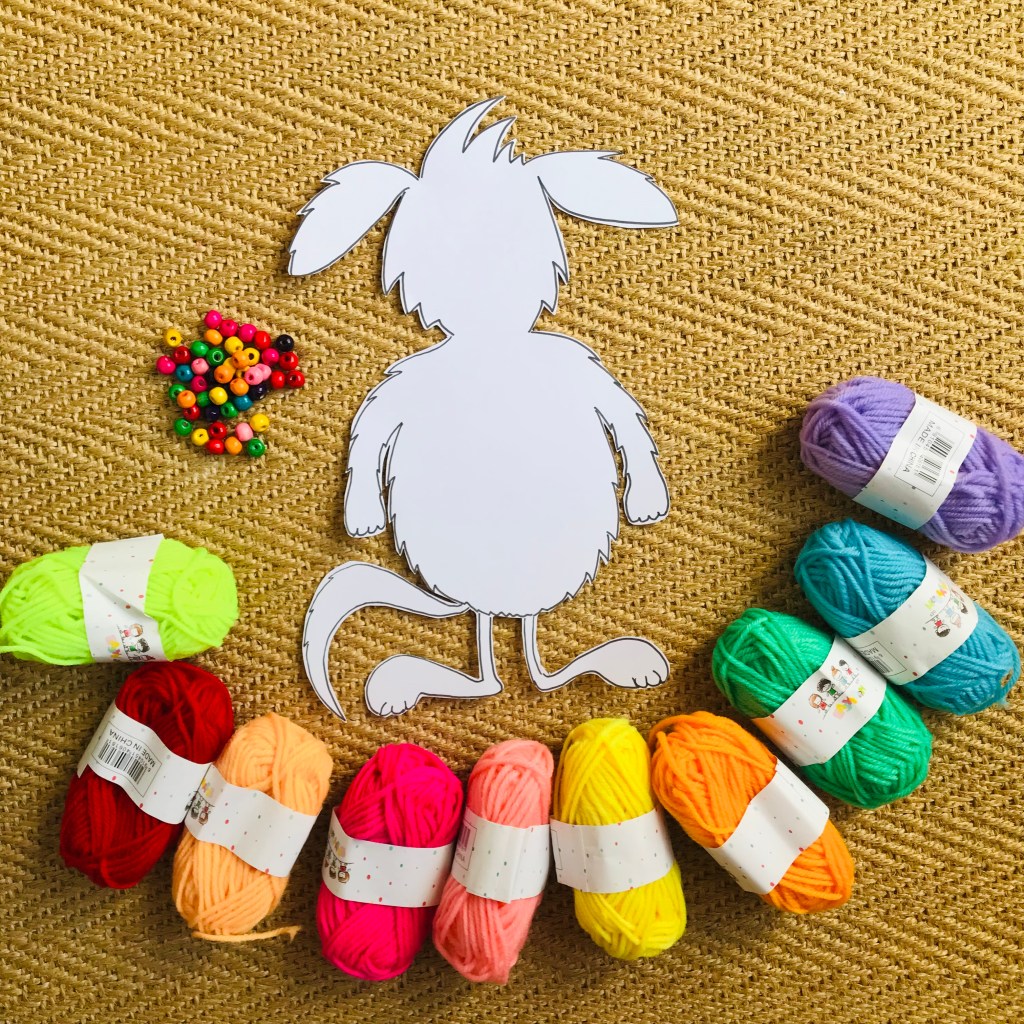
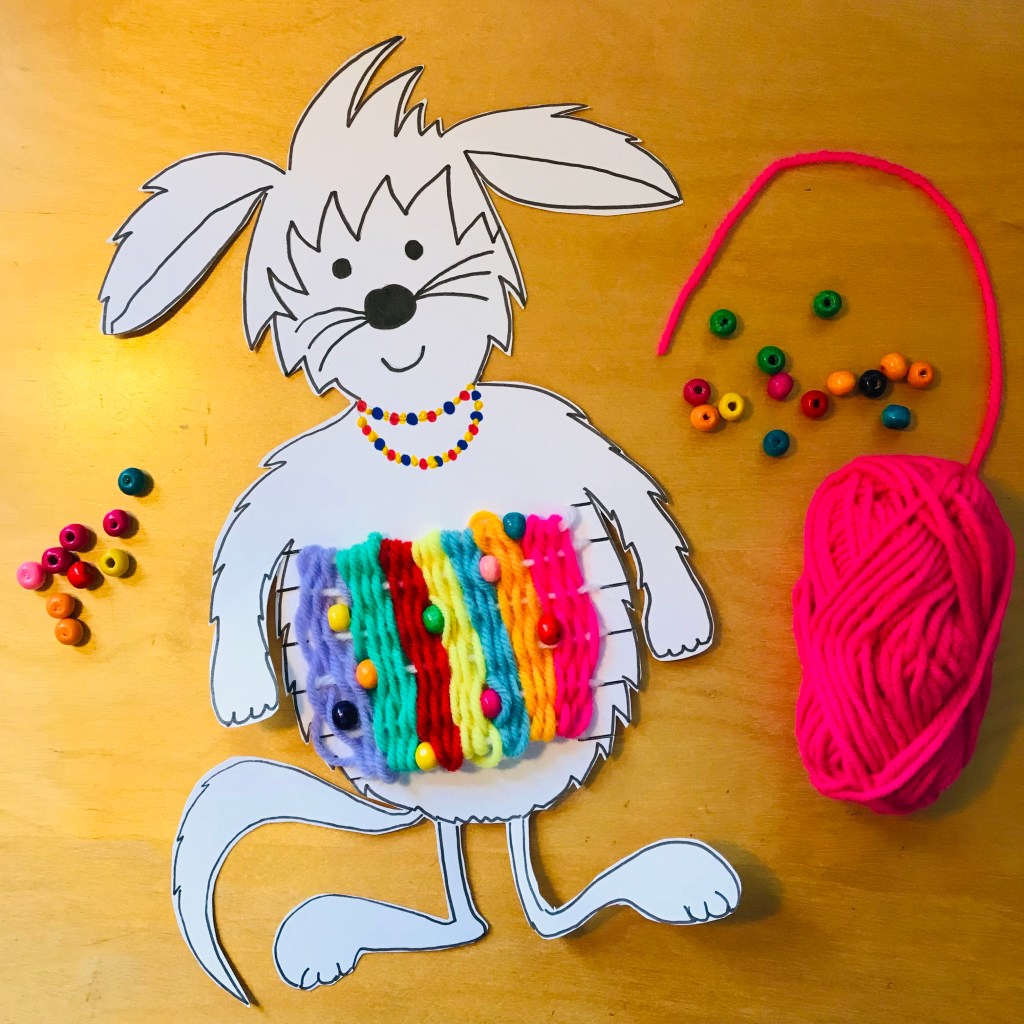
Here’s a cardboard Moffle with a woven body of coloured beads & threads. Different colours to represent different feelings. Children can sometimes find it easier to talk about their thoughts & feelings when they’re focused on arts &crafts. Weaving is an idea for helping to occupy little fingers that like to fiddle! I might playfully ask children I’m working with, ‘What do you think your hands might need right now to help your ears to listen, as we talk together?’ A fiddle toy or activity of some description can often help. Have fun!
Children with relational trauma find it very hard to trust that we will care for them, nurture them & guide them. They’ve been hurt deeply in the past by adults who should have protected them. They close their hearts to relationships, to avoid the risk of more pain.
Unresolved trauma creates a sense of loneliness & isolation. Imagine never experiencing the warmth of social connection, or the confidence that someone is holding you in mind & truly accepts you just as you are.
These are the children who need us the most. Who need us to look beyond their fear & all their strategies to push us away & make us mad at them. Who need to hear we know they are hurting & understand why it’s hard for them to allow us to get close.
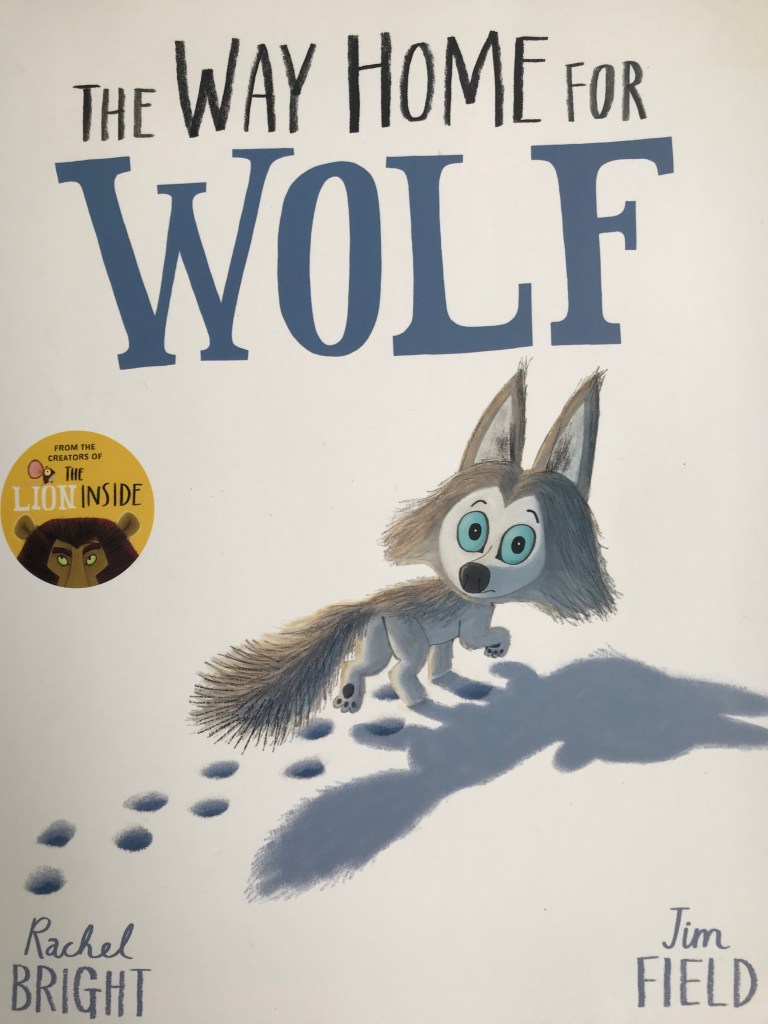
Wilf is a wolf cub who wants to be fierce & to try everything all on his own. When his elders set out to look for a new home, Wilf finds it hard to accept that he is too small to lead. He struggles to keep up & won’t howl for help. All alone, he falls through the ice but as he spins downwards, a narwhal comes to his rescue. What feels like the end for Wilf becomes just the beginning, as he is assisted by a series of arctic animal friends to re-join his pack. The wolves cuddle him close again & Wilf has learnt he can accept support. A pacy, rhyming story that carries us safely out of the cold & darkness of solitude, into the warmth of friendship, kindness & love.
A young child can naturally show stubbornness, as they begin to explore their identity. They learn first about who they are in close relationships with their primary carers. If they experience their parent as delighting in them, celebrating their strengths & guiding them with their struggles, they develop a rounded sense of self. They feel accepted & have confidence that their vulnerability is valued as much as their independence; that all parts of themself will be honoured. A securely attached child may be wilful sometimes, but they learn that its ok to rely on others, too.
A dilemma many parents & carers of children with developmental trauma have is how to deal effectively with challenging behaviour. A relational approach to answering this, emphasises the importance of behaviour support, rather than behaviour management.
A traumatised child may struggle to accept boundaries, as they perceive them as being an evaluation of their core self, rather than of their behaviour. This is very anxiety provoking for a child with deep fears of being bad & who anticipates abandonment. Discipline becomes evidence of their badness & that the adults will get rid of them. Anxiety quickly leads to dysregulation, feelings of shame, & triggering of more challenging behaviour.
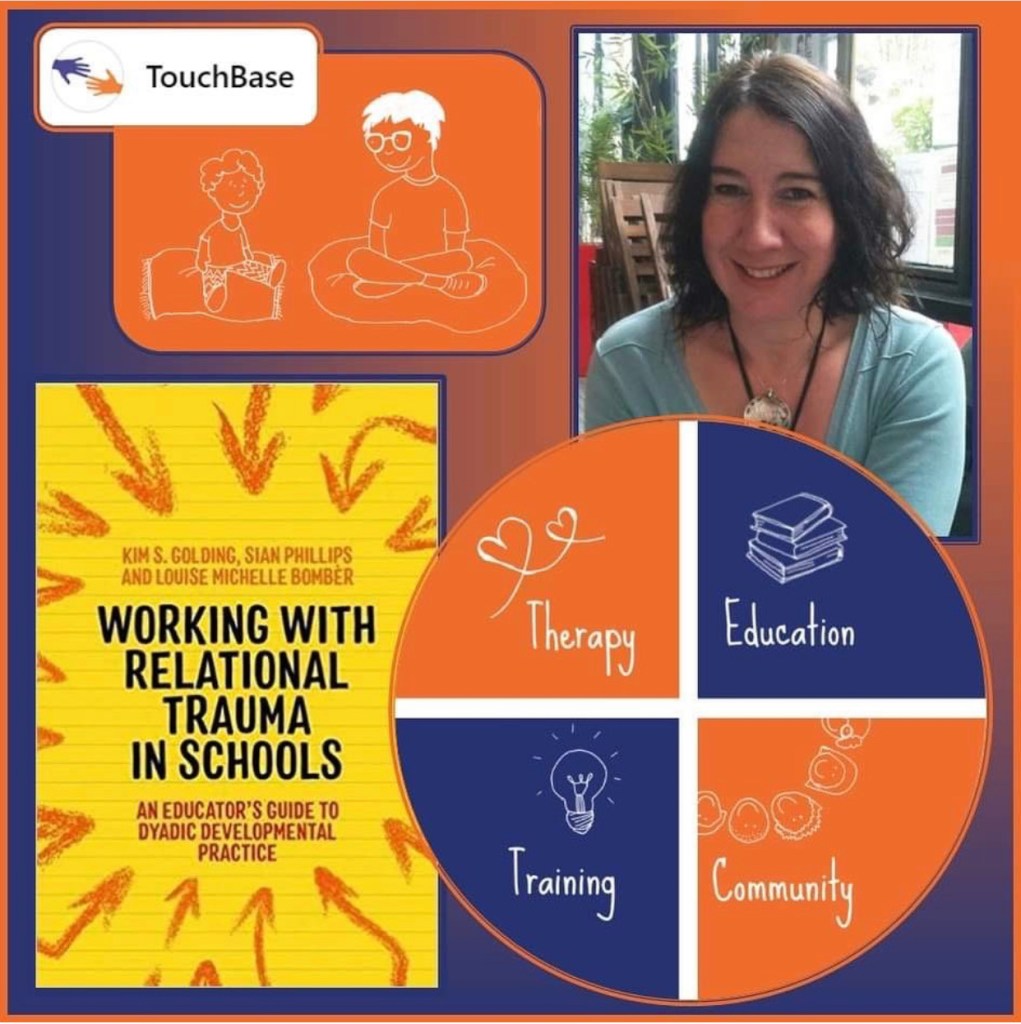
We’re spotlighting the amazing work done by Touchbase, advocating for the wellbeing & education of children & young people who have experienced relational trauma.
Over the past 2 ½ years, I have had the honour of working with the great team at Touchbase in my capacity as a DDP Consultant, providing clinical supervision for their therapists & teachers. I’m also very happy that The Moffles are proving to be a good resource for them & you can read some of their reviews here on our website.
Every parent & carer gets angry sometimes & arguments are natural in families. What’s important is how we make up again, or ‘repair’. This is especially so for a child with an insecure attachment, for whom any conflict immediately becomes about the relationship & their fear of losing you.
Try to see conflict as an opportunity for repair, rather than as a failure. Seeing it this way means no-one needs to be blamed. If we can accept the expression of all emotions as being normal, rather than seeing anger as a sign of disrespect, then it becomes easier to stay in connection with our child. Repair is all about re-connection.
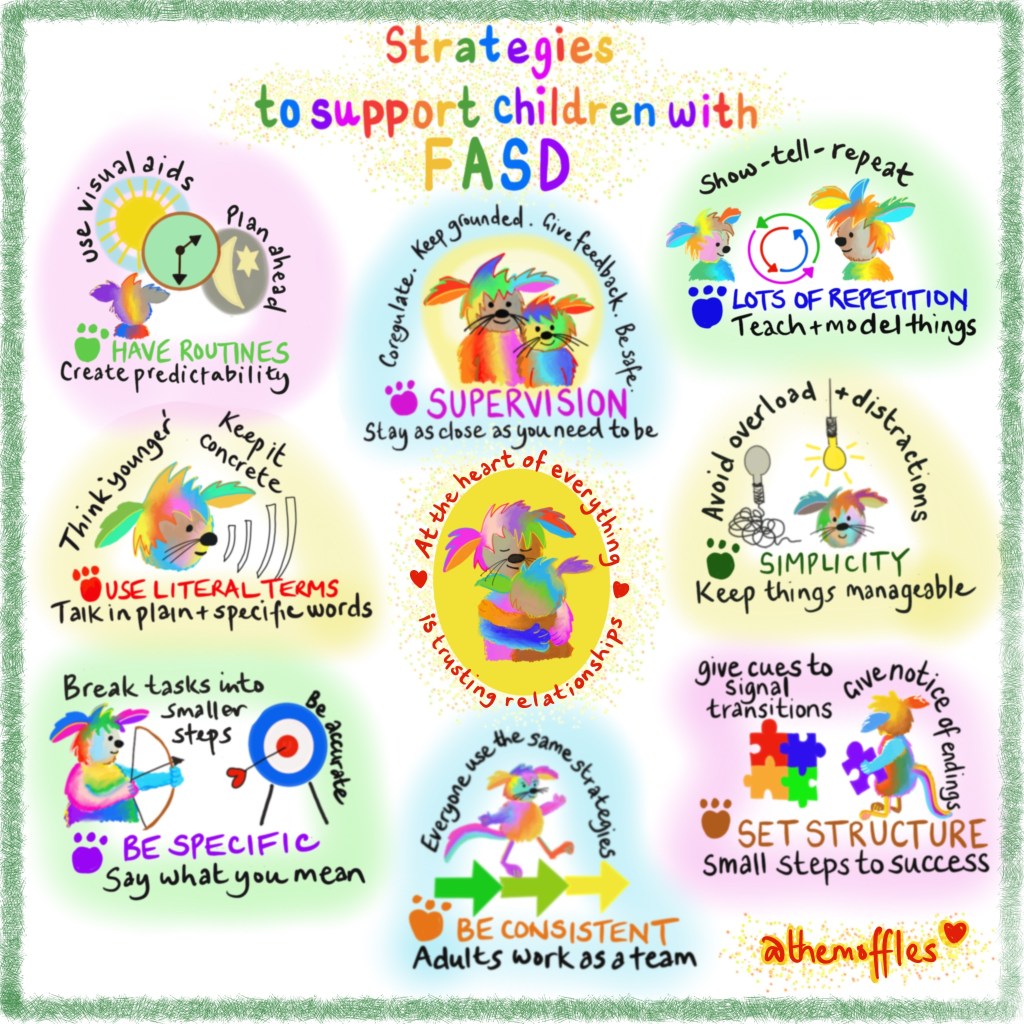
Foetal Alcohol Spectrum Disorders, or FASD, is an umbrella term used to describe a wide range of effects resulting from prenatal alcohol exposure (PAE) & which have life-long impact. These can include physical, emotional & developmental delays and learning disabilities. Because the child’s presentation may meet the diagnostic criteria for a variety of physical and mental health disorders, a multi-disciplinary approach is recommended to obtain an accurate diagnosis.
FASD is thought to affect 3 to 5% the general population which makes it 4-5 times more prevalent than autism. Care experienced children seem disproportionately affected by FASD & concerns for their child, in relation to the impact on them of PAE, is a significant issue in the lives of many adoptive parents & carers.
Since 1967, International Literacy Day has existed to promote the importance of literacy as a matter of dignity & human right. Great challenges have long existed in equalising access to literacy learning opportunities for all our children, in the UK & around the world. The pandemic has only added to these challenges & served as a reminder of how precious opportunities for literacy & learning truly are.
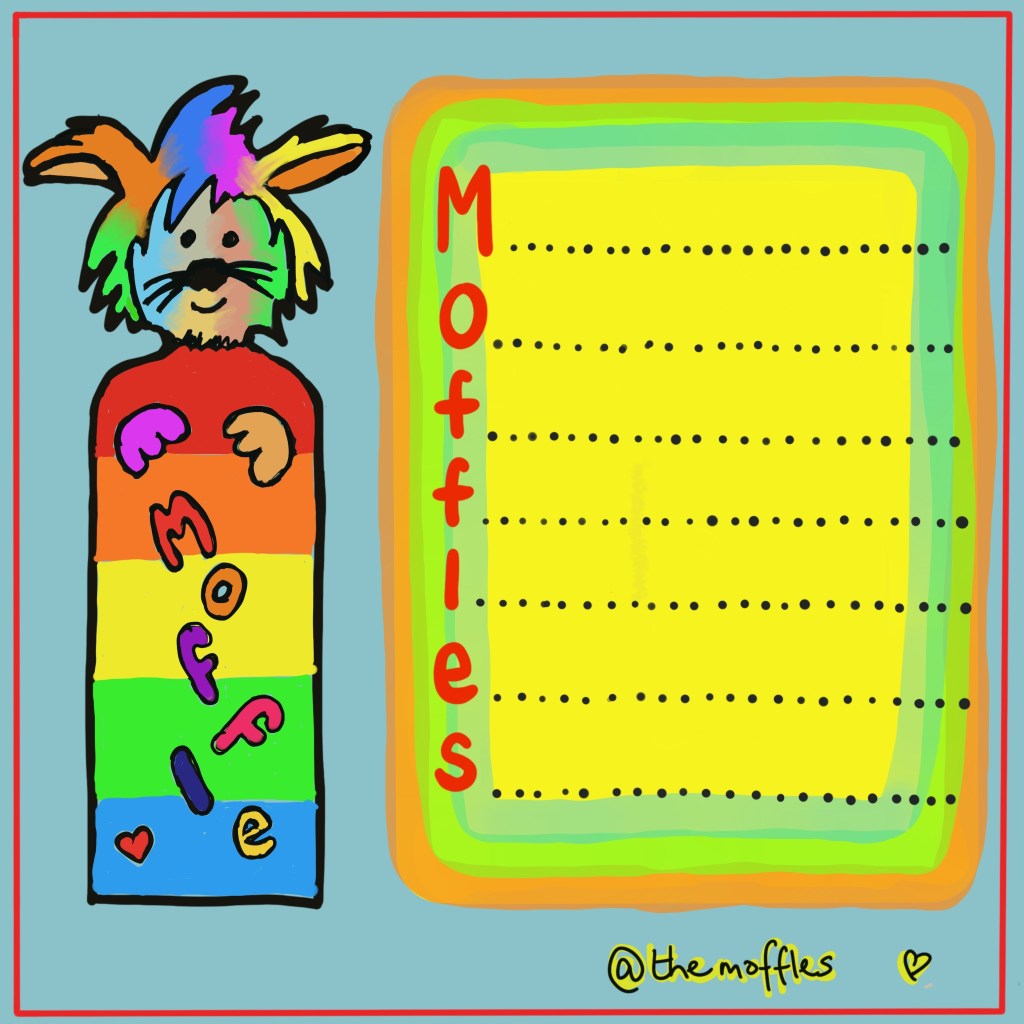
We think one of the nicest ways to celebrate & develop literacy skills is to read a story together, as well as being a lovely chance to promote connection & togetherness. We’ve created a Moffle bookmark, that can be personalised with a child’s name & a book review template. We’ve also made a Moffle Acrostic Poem activity sheet & written an example poem for you! A few fun ways to encourage interest in reading & sharing thoughts & feelings about favourite books.








 Welcome to the world of the Moffles!