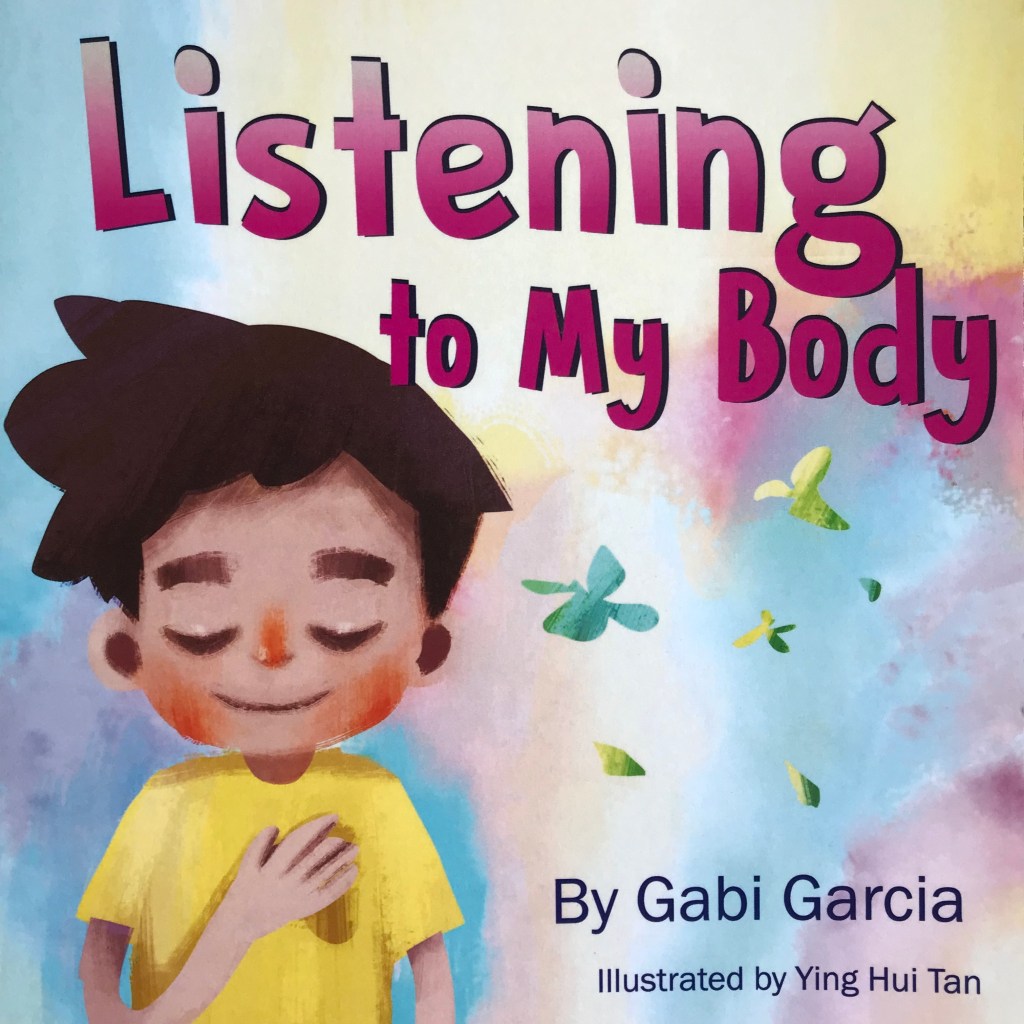
Listening to My Body

We see a little boy’s growing ability to listen to his own body & what it is telling him, as he makes connections between body sensations, emotions, thoughts & behaviour. On his journey of self-discovery, he rides his first rollercoaster; meets the challenge of finding his little sister has messed up his newly completed jigsaw puzzle & has his first day at school. The story & the practice activities encourage sensory awareness & mindfulness.  This picture book is a simple & helpful guide to becoming more aware of our inner world.

A child first learns about themself & the world around them in relationships with their main caregivers. Loving adults delight in their small child & provide lots of opportunities & commentaries to help their child to make sense of themselves & their experiences. They soothe their child when upset, angry or frightened & help them work out what they need. Through such interactions, the child learns how to self-regulate & becomes confident in understanding & trusting their own body & mind. A child with developmental trauma has not experienced enough good care or soothing early in life & may well have experienced abuse, so they can develop a very fragmented sense of self. They may shut down their capacity to feel sensations or emotions, to protect themselves from the painfulness of past experiences & a world perceived as a frightening & unsafe place.

click here to read more
Curiosity puts the C in PACE!

Curiosity puts the C in PACE! It’s an attitude of not knowing & involves nothing more than a genuine desire to understand what might be going on for the child. It can involve making best guesses about what is happening. We convey our curiosity in a gentle, accepting tone & by tentatively wondering aloud about what the child’s experience might be.

Curiosity helps to increase our empathy for the child & our emotional connection with them. When we take time to explore what is going on behind the behaviour, it reduces the danger of us jumping too quickly to negative conclusions or responding from a place of anger or impatience.

Curiosity about why a child might be thinking or feeling the way that they do does not need to involve passing judgment. With curiosity, we can help figure out how their thoughts or feelings might have influenced their behaviour. This can be helpful for a child who genuinely doesn’t know why they behaved in a certain way, or who feels too ashamed to say why. The more they can articulate their thoughts & feelings, the less likely they are to act out behaviourally.

click here to read more

What Color is Your Day?

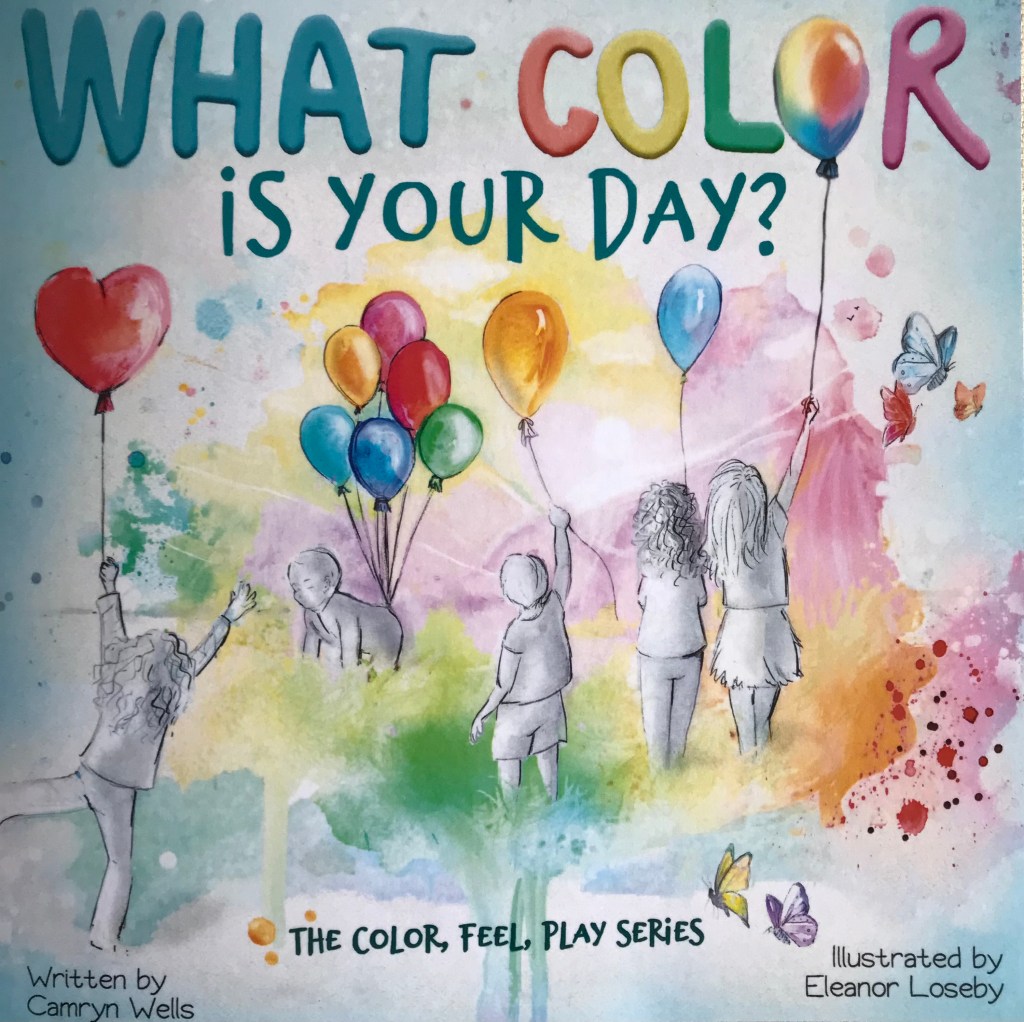
The Moffles love connecting colours with emotions & body feelings & here is another beautiful picture book to help you do just that. There is a tender opening question to help us pause & reflect – what colour is your day, my love? – & an expression of unconditional positive regard – whatever you feel is beautiful, because it is you. The rhyming words & drifting, swirling shapes of the watercolour illustrations create a sense that emotions are layered, nuanced & constantly changing. We can watch them come & go, like clouds passing across the sun. This is a book that approaches our inner world in a gentle way, encouraging children to become curious about how they feel.

So many traumatised children have learned to lock their feelings away – in their heads or their hearts. In family therapy, we create stories to help make sense of why this might have happened. Often a child discovers that they found lots of ways to keep themself safe when they had no-one else to do this for them. They learned to feel nothing. We explore how this was very resourceful, when to feel emotions would have been so sad and scary and painful. Then we think about whether it is still helpful to them now. In their own time, we can find ways to practice opening to feelings again, so that their world can become more joyful & colourful.

click here to read more

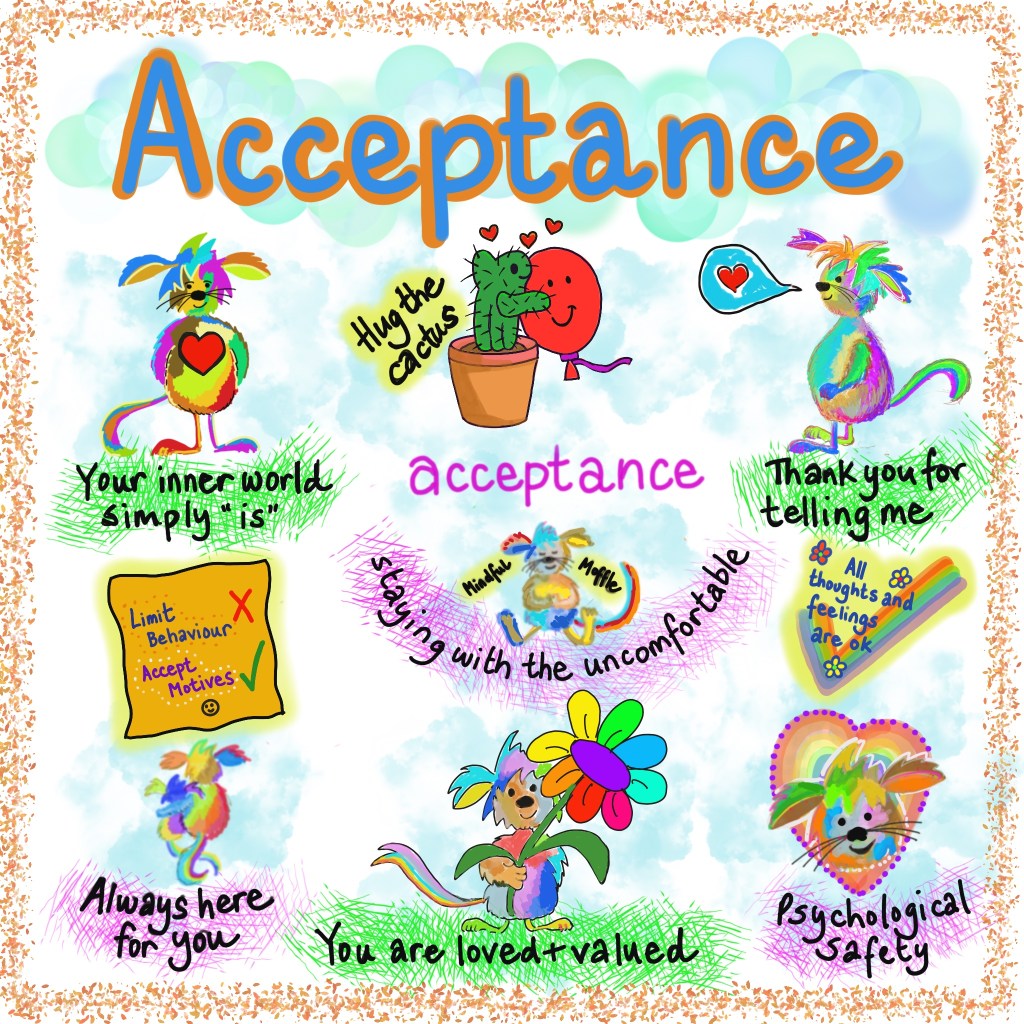
Acceptance puts the A in PACE!

Acceptance from a parent or careris at the heart of a child’s sense of personal safety & self-value. It helps them to learn that they are safe, worthwhile & valued by others & it enables them to share their inner world without fear of judgement or censorship. Whilst their behaviour may be evaluated & limited, they can be sure that all their thoughts & feelings are accepted. Their inner life is neither right nor wrong, it simply ‘is’. Acceptance helps a child to trust & listen to their own thoughts & feelings & to grow into their own authentic self, without shame.

 Accepting a child’s intentions does not mean that we must be permissive of all behaviours, or that we cannot set limits & boundaries. However, when we set expectations about behaviour, still we can communicate an unconditional acceptance of the motives behind the behaviours & an empathy for why they may have developed certain patterns of behaviour or coping strategies.  When a child experiences this acceptance, it helps them to develop confidence that conflict and discipline is directed towards their behaviour & that it does not threaten their relationship with their parent or carer.

click here to read more

Pawfect Breathing Games

Pawfect Breathing Games

Mindful breathing can help children feel calmer, but sometimes breathing practices are hard for traumatised children. Practices that involve being very still or having eyes-closed or with periods of silence can be challenging for a child if they are easily triggered into a fight/flight/freeze response. In survival mode, it is impossible to be mindful.

I have found in my therapeutic work that initially many children have not been able to take deep breaths. Short, shallow breathing has become habitual for them, probably as a result of living in constant states of hypervigilance & tension. Finding simple but playful activities that involve an element of breath control, can be a good introduction to mindful breathing, & feel less challenging than focusing solely on the breath. Such activities can also help to encourage co-operative play.

click here to read more

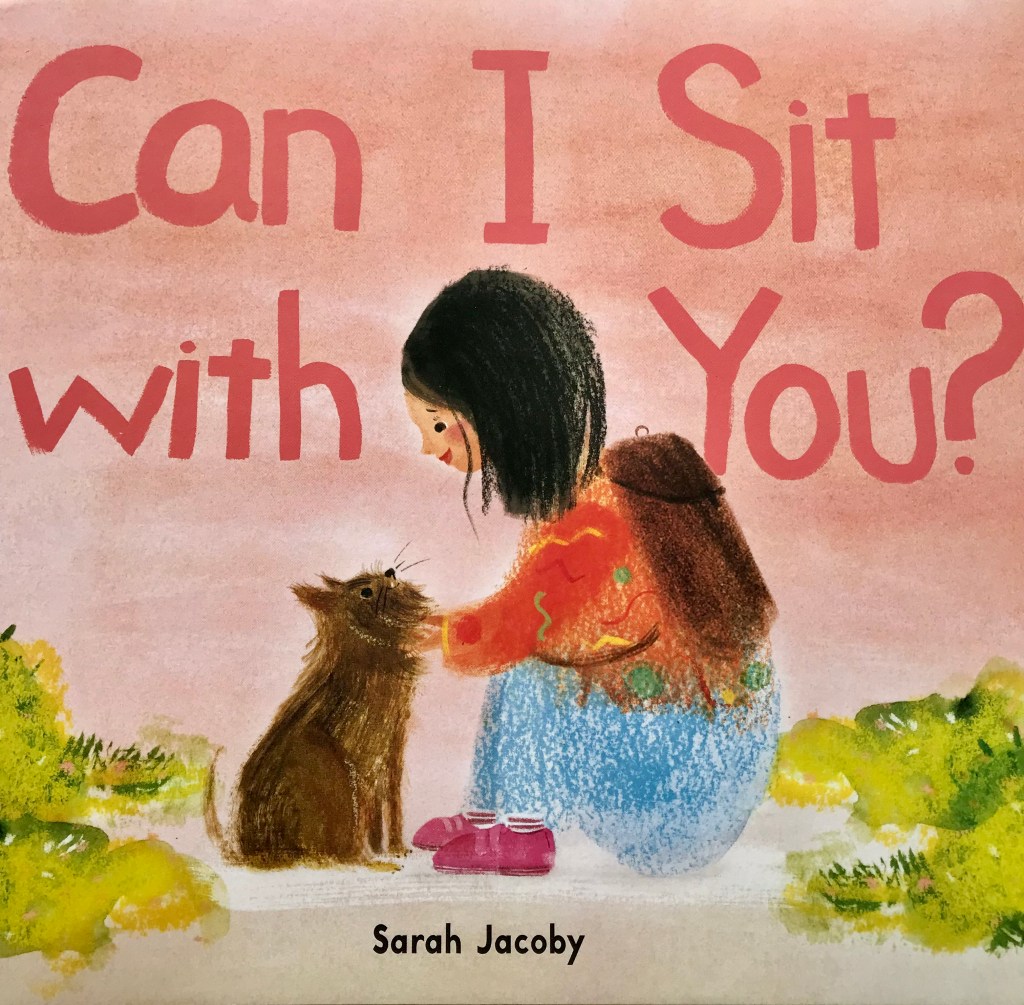
Can I Sit with You?

A stray dog chooses a little girl to befriend. However she is feeling & whatever she needs, he offers to sit with her & keep her company. He lets her know that wherever she goes, he is willing to walk with her, too.  They enjoy simple pleasures together, like throwing & fetching sticks. Slowly & gently, their friendship grows. When the girl wants to play with other friends, or go out & explore alone, he understands this need. He waits for her, delights in her return, & is ready to sit with her once more. This is a story of companionship, loyalty & learning to love & be loved. A cute, canine tale.

For children moving into new families, pets have potential benefits & challenges. Pets may make the transition easier. They can be a nice source of ‘contact comfort’ – stroking & holding pets & having that skin-to-fur sensation, can lessen the intensity of difficult feelings. Sometimes, children are reassured, when they see their new parents or carers being kind to pets & looking after them well. This is a ‘sign of safety’ for them, useful especially for children who are hypervigilant for danger. But some traumatised children are frightened of pets or may associate pets with previous abuse; or present a risk of cruelty themselves towards the pets.

click here to read more

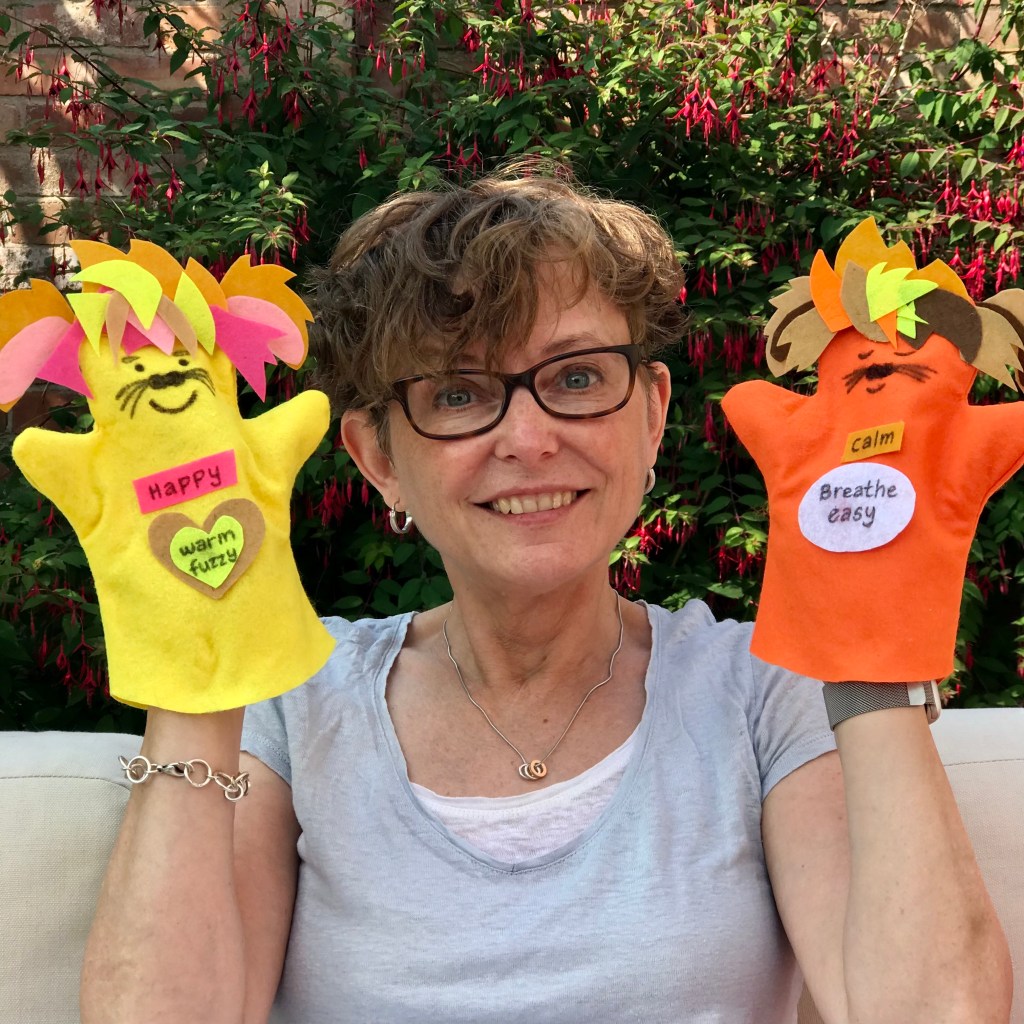
Moffle Hand Puppets

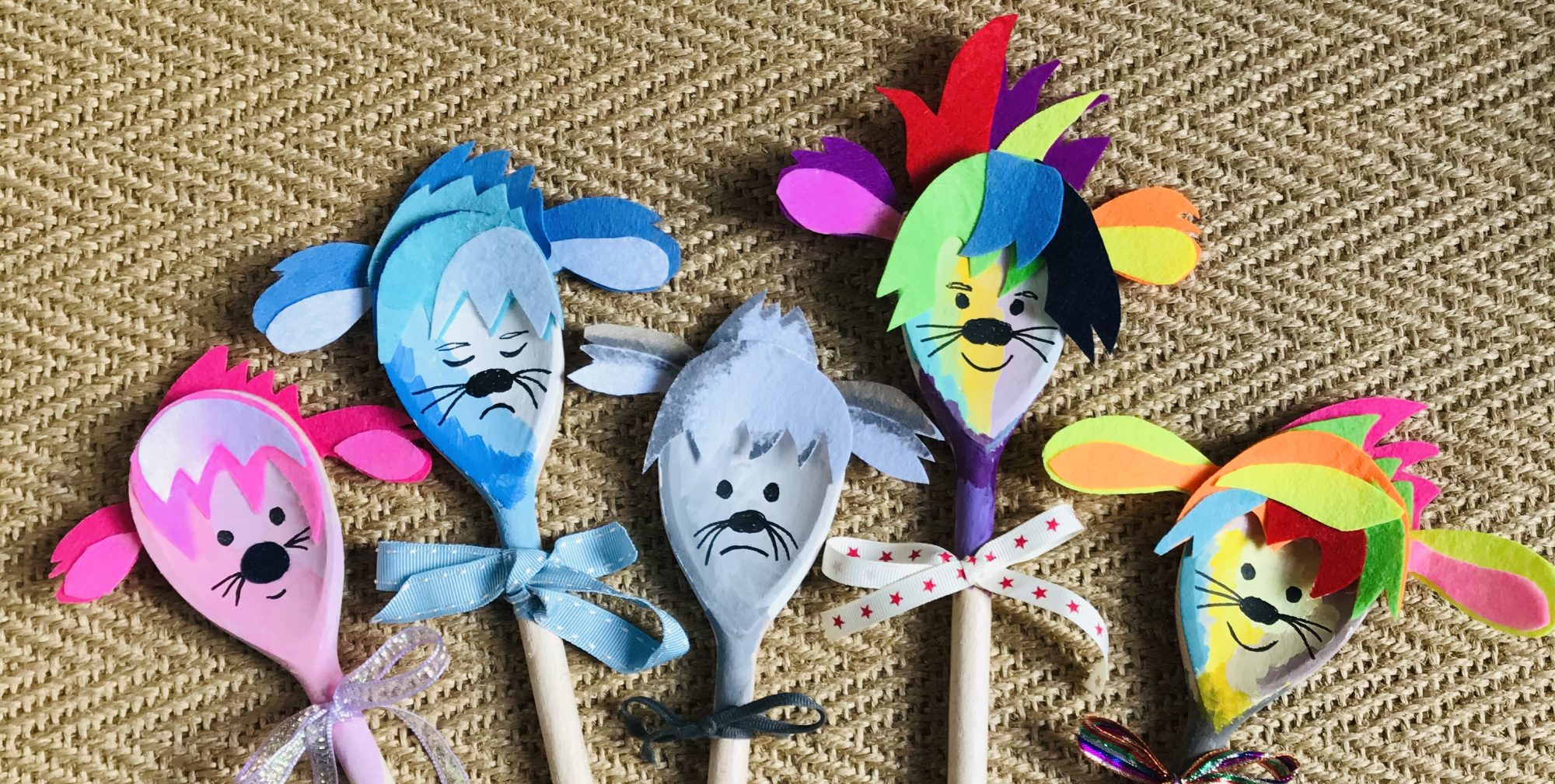
We have Moffled some hand puppets! We’ve labelled some emotions, given them colours & expressions & described a body sensation for each one.

Puppets can be great to use for exploring thoughts & feelings & creating stories together.  Making your own puppets means you can really personalise them –choose your own colours & shapes for emotions & write on them as many sensations or feelings as you like!

There’s a natural playfulness to picking up a puppet & using your hand & voice to magically bring it to life. Children often enjoy using puppets to talk about things, as they can help to externalise situations & create a safe distance between the child & any problem. The little characters can take ownership of the conversation & be used for playing out different scenarios & practising new behaviours or ways of being.  A lovely way to encourage problem solving & empathy, & an opportunity to create new meanings & understanding together.

Moffles Parenting!

Dan Hughes’s PACE (Playfulness, Acceptance, Curiosity & Empathy) reminds us of the therapeutic attitude. The ‘two hands of parenting’ combine PACE-fulness with boundaries, structure & consequences – or ‘Connection with Correction’.

Here is ‘Moffles’ to help think about how to put the two hands of parenting into action, when a difficult parenting situation occurs:

M – Make it safe.

What is going on & do I need to do anything right now to keep everyone safe? Without physical safety it is very hard to create emotional safety.

O – Open up to your thoughts & feelings.

Take a quick pause & breathe. What needs to happen to ‘turn down the shark music’ (that sound in our heads of bad experiences & fears for the future) & to focus on the here & now? What do you need to stay open & engaged?

F – Focus on your child’s needs.

Do they need sensory regulation first to help them back into the thinking zone? Are they ready to reflect?  Provide comfort. ‘Think about the how’ – tone of voice & non-verbal communication is as important as what you say.

F – Figure it out together.

‘Chase the why’. Listen & look for the meaning behind the behaviour, using curiosity & empathy. Say yes to all thoughts & feelings, even when you’re saying no to the behaviour. ‘Wonder aloud’ to communicate you’re on their side.

L– Look for ways to connect.

Emergency situations call for A&E – lots of acceptance & empathy.

E – Evaluate how to respond to behaviour.

 Is PACE enough? What lesson do you want to teach? Are they ready to learn? Think natural consequences – timely, proportionate & related to the incident.

S – Soothe & repair.

What do you & your child both need to feel better? How can you communicate your relationship is strong, no matter what? Involve your child in thinking about what they can do to make it right with anybody else involved.

Paws & Breathe!

Observing the breath can be helpful for a child if they are angry, tense, or anxious. We have found that 5-finger breathing (or pawsing for breath if you are a Moffle) is a great way to help a child slow down & become more grounded & present in the moment. Ask them to calmly trace the fingers of one hand with the other hand, breathing in as they go up & out as they go down.

Encourage your child to let their breath come naturally as they do this. There is no need to try & control the speed of the breathing, or to breathe any differently to normal. Reassure them that breathing happens all by itself & we are just going to take a few breaths to notice it.

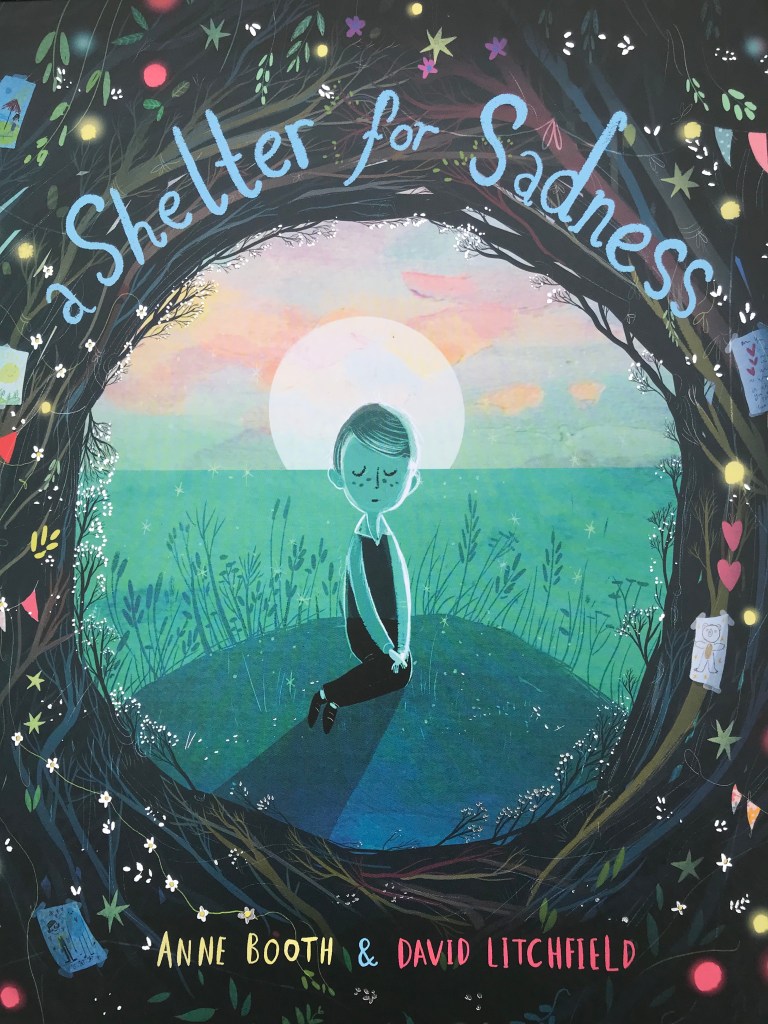
A Shelter for Sadness

A little boy builds a shelter, in which he can look after his Sadness, with all the care, empathy & acceptance that he knows it deserves. Sadness is a soft & scruffy little character, who shifts in shape & size & seems to know what it needs, if the boy looks & listens well. Sadness holds its own beating heart, which is visible, not hidden away & we see the boy treat it gently & without fear. This is a story that honours sadness & invites us to explore our relationship to it.

The beautiful illustrations show us how sadness can alter & elicit different moods, like the different seasons of the year. Whatever the season & however big or small, loud, or quiet sadness becomes, we are shown that it has a right to be there. We see that the boy can shine a light on Sadness or hide it away; visit it as often or as infrequently as feels right, & we are reminded that there will be good reasons for doing both.

click here to read more